Using the TIP model
The hardware and software choices I would make in relation to the English discipline area would be selected when using the Technology Integration Planning (TIP) Model for teachers. The TIP model encompasses three broad phases that guide teacher planning and helps ensure that technology use will be meaningful, efficient, and successful in meeting needs of students (Roblyer & Doering, 2014). Figure 1 shows the steps within each of the phases.
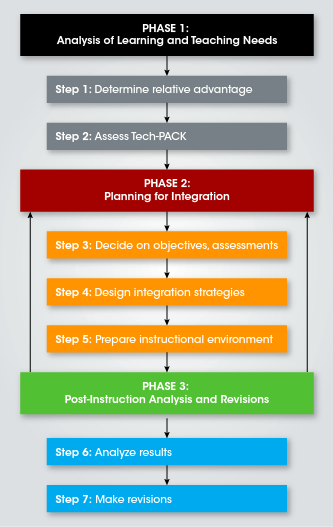
The first phase involves analysis of learning and teaching needs (Roblyer & Doering, 2014). Within this phase, I would reflect on my skills in each of the TPACK areas to evaluate where I need support and how I might use my strengths. For example, I might be lacking in pedagogical knowledge (PK) to teach students with special educational needs. Before going any further in the planning phases, I might seek advice from a more experienced colleague or appropriate paraprofessional.
The next phase requires planning for integration (Roblyer & Doering, 2014). In this phase, the teacher decides on objectives and assessments that involves the integration of suitable technology . King-Sears, Swanson, & Mainzer (2011) and Seo & Woo (2010) advocate that when the curriculum is made accessible through technology, students with disabilities have the same opportunities to learn as their peers with out disabilities ( as cited by Roblyer & Doering, 2014).
Lastly, the third phase involves analyses of results and an opportunity to make improvements for next time. Successful technology implementation may lead to the project or lessons to be used as a resource for other teachers with similar needs in their classrooms.
References
Roblyer, M., & Doering, A. (2014). Integrating educational technology into teaching. Harlow, England: Pearson.

 ESC407: Classroom Technologies